

Environmental Management Operation
Korea Circuit has established an environmental management policy based on the RBA Code of Conduct and ISO 14001, and operates an environmental management system to systematically manage environmental impacts that may arise throughout its business activities.
To enhance transparency and build stakeholder trust, the company discloses key environmental information, such as greenhouse gas emissions, waste generation, and air and water pollutant emissions, through its website, environmental information disclosure system, and sustainable management report. This ensures transparent communication of the direction and key achievements of environmental management to stakeholders and consistently shares the commitment to responsible environmental practices.
The company continuously monitors and manages energy usage at each business site, optimizing facility operations and improving energy efficiency to minimize environmental impacts. Additionally, it expands the use of recycled raw materials, such as gold and copper, to strengthen the resource circulation system and reduce environmental burdens from raw material extraction and use.
Korea Circuit is committed to continuously enhancing its environmental management system and expanding site-centered environmental improvements and reduction activities. This will strengthen its capacity to respond to climate crises and practice responsible environmental management for a sustainable future.
Environmental Management Organization
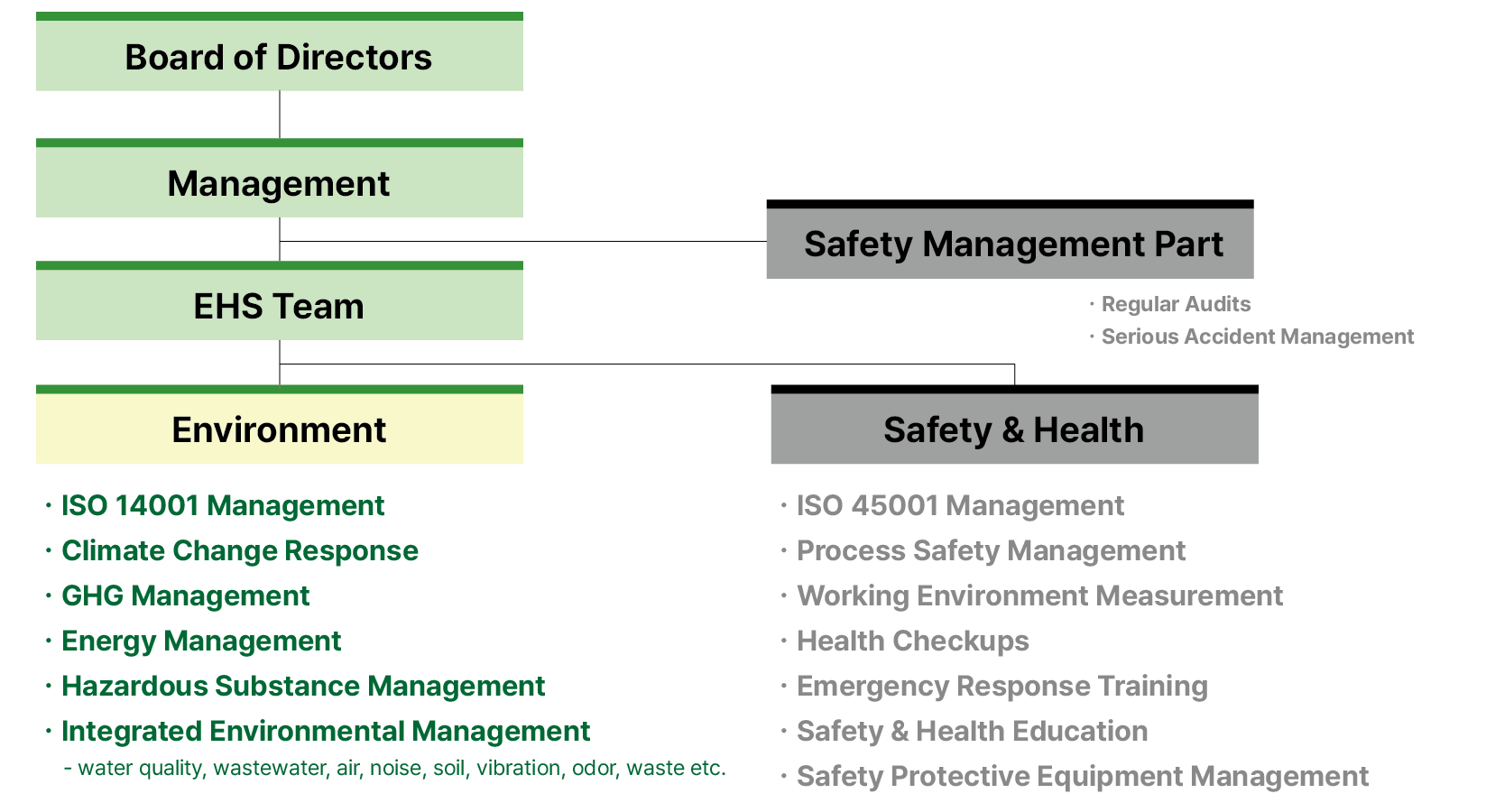
Korea Circuit has established an environmental management system based on the RBA Code of Conduct and ISO 14001, systematically operated by a dedicated organization at the company-wide level. Key agendas related to environmental management are driven under the supervision of the Board of Directors and management, with regular inspections conducted by the safety management department to continuously manage the system's operational status and implementation level. The environmental team within the Safety Environment Team handles core environmental management tasks, including air and water pollutant management, waste management, energy and resource usage management, and hazardous chemical responses. Furthermore, it strictly complies with relevant regulations and internal standards, pre-emptively checking and improving workplace environmental risks to practice responsible environmental management and sustainable business operations.
Environmental Management Policy
Korea Circuit has established an environmental management policy based on the RBA Code of Conduct and ISO 14001 environmental management system to protect the environment and realize a sustainable future. This policy serves as a key operational principle of the company. We do not merely comply with domestic and international environmental laws but set stricter internal management standards compared to legal requirements. This ensures efficient use of resources and energy, reduction of pollutant emissions, management of circular waste, and reduction of greenhouse gases, thereby minimizing environmental impact across all business processes. Furthermore, we strive to internalize these environmental management values in the daily lives of all employees by strengthening continuous education and internal communication. We focus all our efforts on enhancing organizational execution capabilities by raising individual environmental awareness.
Understanding and Responding to Environmental Laws/Regulations
Category | Key Law/Regulation | Response Strategy |
|---|---|---|
Pollutant Emissions Reduction | ㆍAct on the Integrated Control of Pollution- Emitting Facilities | ㆍInternal Management Standards Operations ㆍResource Circulation Operations Based on 3R (Reduce, Recycle, Reuse) ㆍPromotion of Waste-to-SRF (Solid Refuse Fuel) Conversion |
Chemicals | ㆍChemicals Control Act | ㆍProcess Safety Management (PSM) Operations ▶ Achieve “S” Grade in 2024 and Maintain for 4 Years ㆍStrengthen Chemical Accident Alert Systems |
Energy | ㆍGreenhouse Gas Emissions Trading Scheme ㆍRationalization of Energy Use Act | ㆍStrengthen Waste Heat Recovery Operations ㆍPromote Conversion to Eco-friendly Corporate Vehicles ㆍPromote Energy Savings and Reduction of Scope 1, 2 Emissions ㆍProcure External Renewable Energy (PPA) |
Environmental Management Activity
Eco-friendly Vehicle
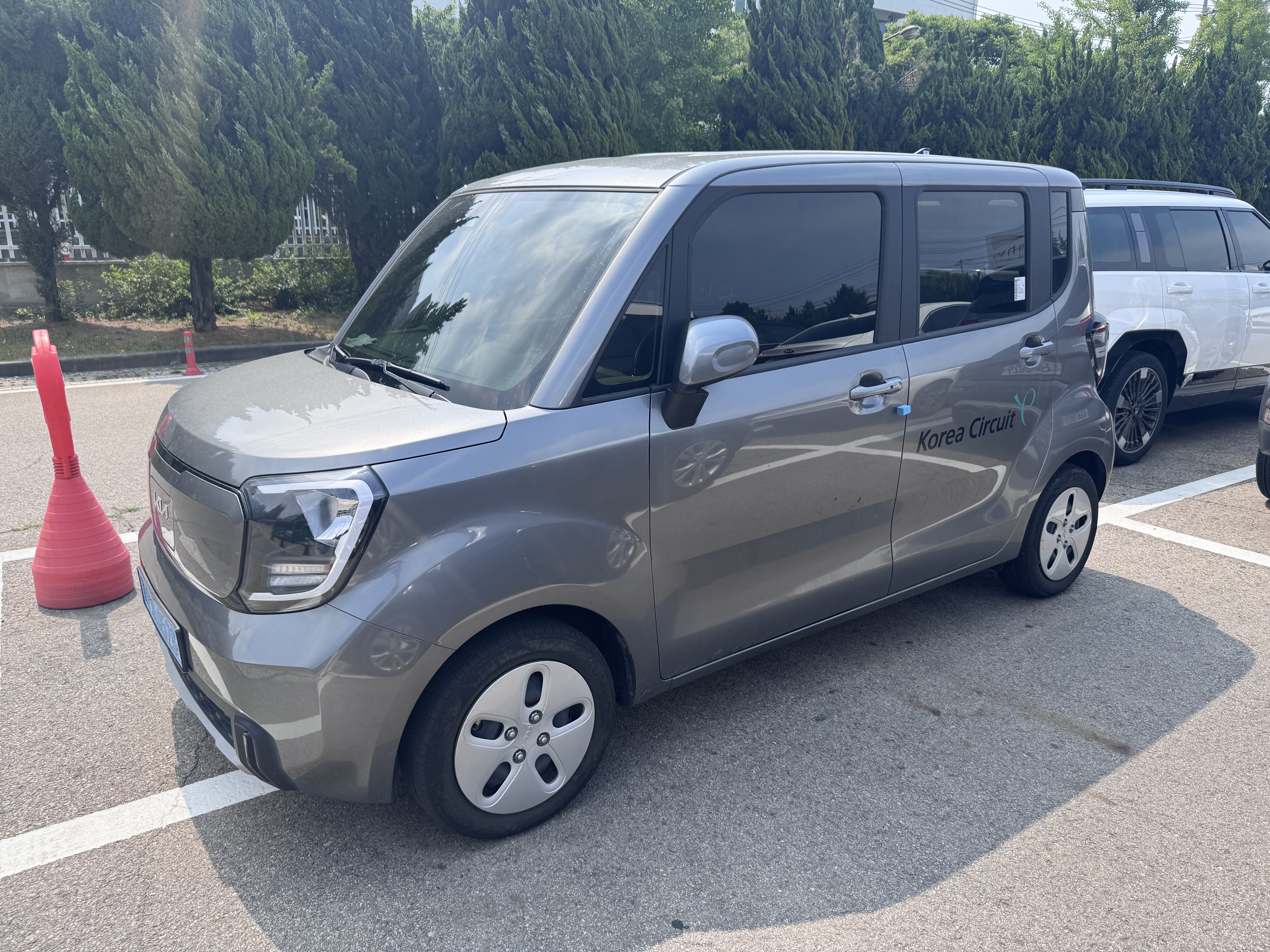
Korea Circuit is gradually transitioning to eco-friendly mobility to reduce greenhouse gases and air pollutants generated during business operations. Following the establishment of electric vehicle charging infrastructure last year, two internal combustion engine logistics vehicles were converted to electric vehicles in March 2025, achieving a reduction of fossil fuel usage by about 56% compared to the previous year. However, some temporary internal combustion vehicles were used to address seasonal logistics demands during the summer. Korea Circuit plans to continuously expand the conversion to eco-friendly vehicles by considering the characteristics and demand changes in logistics operations.
(Unit: Number of Vehicle)
Status of Eco-friendly Vehicles | 2023 | 2024 | 2025 |
|---|---|---|---|
Number of Eco-friendly Vehicles | - | - | 2 |
Total Number of Vehicles | 19 | 19 | 17 |
Ratio of Eco-friendly Vehicles | 0% | 0% | 11.8% |
* Total vehicles consist of 17 executive vehicles and 2 logistics vehicles (Total 19 vehicles)
Water Resource Management Policy
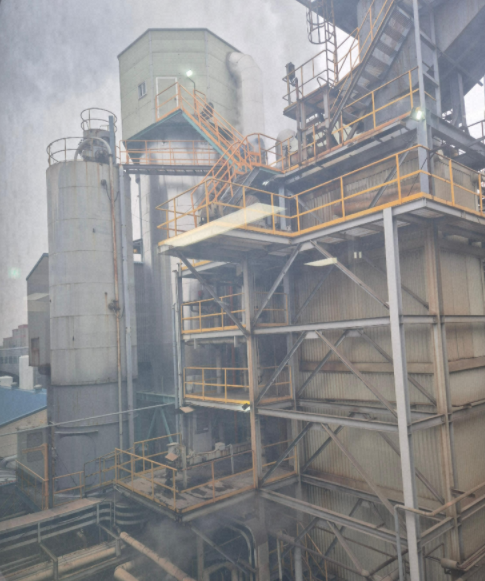
Korea Circuit systematically manages the entire process of water intake, use, treatment, and discharge within its business sites. The water used in the facilities is sourced from externally supplied municipal and industrial water. Wastewater generated after use in processes is treated appropriately at in-house wastewater treatment facilities and discharged according to relevant legal standards. To efficiently use water resources, RO concentrate from pure manufacturing processes is recovered and reused as makeup water for scrubbers and cooling towers. This approach reduces the use of new water and expands water circulation within the business site. Water usage and wastewater discharge status are managed site-wide, with municipal water usage being continuously monitored through daily inspections. Real-time monitoring systems are operated to ensure stable management of wastewater discharge quality, with quarterly self-measurements by external specialized agencies and biannual specific pollutant measurements to regularly check management levels. Wastewater is treated and discharged according to internal management standards, which are stricter than legal requirements, to minimize impacts on local communities and surrounding watersheds. Korea Circuit aims to continuously reduce water usage by improving water use efficiency and expanding wastewater reuse. The company will also develop additional reuse plans considering process characteristics to enhance water resource management systems further.
Waste Recycling
Korea Circuit has fundamentally improved the handling of general waste to enhance its resource circulation value. In March 2025, the company completed a comprehensive overhaul of the existing incineration practices, adopting a method that converts waste into Solid Refuse Fuel (SRF) for recycling. This change has significantly increased the energy recovery from general waste and minimized the environmental impact of waste treatment processes. As a result of this successful improvement, the incineration volume of general waste decreased by approximately 81% compared to the previous year. Korea Circuit plans to continue reinforcing management to fully resource all potential residual incinerated waste, aiming to achieve 'zero incineration of general waste' within its operations. Thanks to these proactive efforts, the overall waste recycling rate has increased significantly from 80% to 91%, representing an 11% improvement. The company also consistently maintains a zero landfill level and reinforces a resource circulation system focused on waste reduction, reuse, and recycling. Korea Circuit will continue to reduce waste generation, expand the discovery of recyclable resources, and consolidate its leadership in eco-friendly resource circulation through continuous process improvement.
Waste Heat Recovery System
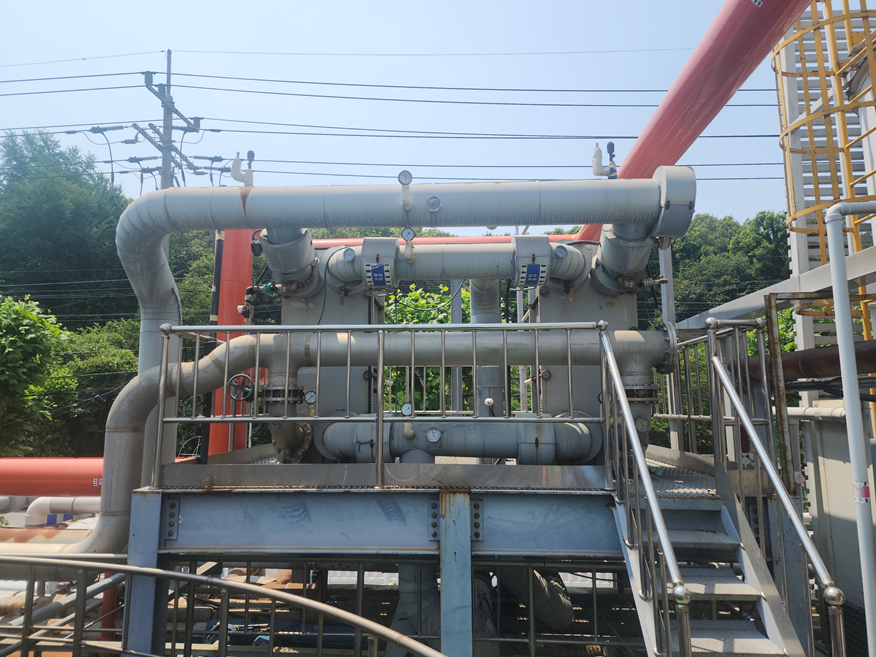
Korea Circuit operates a heat exchange system that recovers and recycles waste heat from wastewater effluent and RO concentrate, saving approximately 10,000 tons of steam annually. In 2025, the company improved the concentrate supply line, where heat exchange efficiency was insufficient due to reduced operation rates of some connected facilities, and optimized process conditions. As a result, the daily heat exchange processing capacity of the concentrate increased from 100 tons to 500 tons, achieving an additional annual reduction of approximately 695 tons of steam. This corresponds to about a 7% efficiency improvement over previous heat exchange operations. Korea Circuit will continue to identify unused energy from processes and enhance the integration of waste heat recovery facilities to reduce both energy consumption and greenhouse gas emissions.
Environmental Education
Korea Circuit provides environmental education to new employees upon hiring to enhance the effectiveness of environmental management and strengthen the environmental management capabilities of its employees. The company plans to expand field- and role-centered environmental education to further integrate environmental management into the corporate culture and all aspects of work.
Category | Method | Target | Personnel | Frequency |
|---|---|---|---|---|
Orientation Environmental Education | Group Training | New Employees in 2025 | 1,082 | 50 |