Double Materiality Assessment Process
Korea Circuit conducts an annual Double Materiality Assessment to identify sustainability management issues that may significantly impact stakeholders and to develop an effective response strategy that comprehensively considers impacts on not just financial resources but also on the environment and society. This system is proactively applied following an evolving evaluation framework that is gradually spreading among major corporations and ESG-leading groups. Our company has adopted this double materiality assessment system under strategic judgment considering both sustainability and corporate value enhancement.
To identify key issues in sustainability management and strengthen strategic responses, Korea Circuit adopts various standards as references for materiality assessment, including the most widely accepted global standard GRI (Global Reporting Initiative), the industry-specific financially-focused SASB (Sustainability Accounting Standards Board), the RBA (Responsible Business Alliance) code of conduct for our ESG activities, and the UN SDGs (Sustainable Development Goals) which are universally pursued by the international community. This methodology aims to analyze topics that significantly affect the corporation’s sustainability and financial value from a double materiality perspective, and to derive core issues.
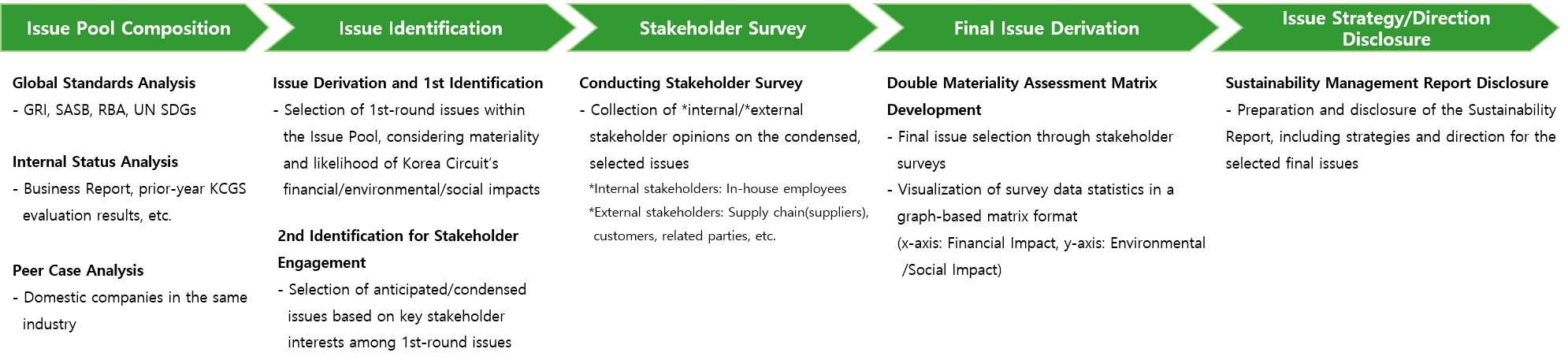
Issue Identification and Materiality Assessment Process
Korea Circuit has carried out the double materiality assessment through a five-stage process involving issue pool formation, issue identification, stakeholder survey, final issue derivation, and issue strategy/direction disclosure as follows. Initially, 55 ESG-related issues were identified, and among them, 10 items expected to be key concerns for stakeholders were selected for the survey. Subsequently, the opinions of stakeholders and the financial, environmental, and social impacts of each issue were comprehensively reviewed to derive 5 final material issues.
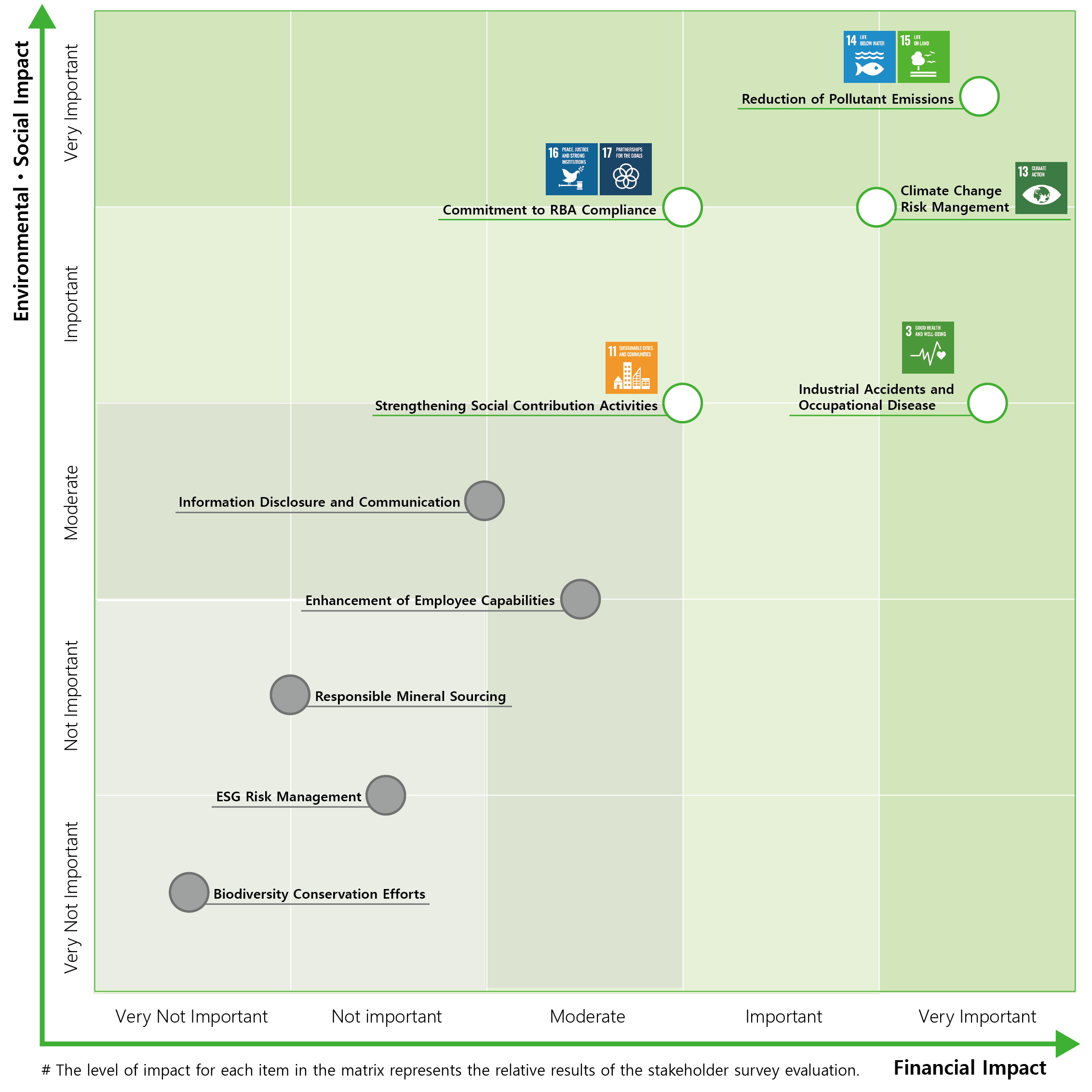
Double Materiality Assessment Results
The 2025 ESG final issues for Korea Circuit have been ultimately derived as follows, based on the aforementioned [Issue Identification and Materiality Assessment Process].